
Hysteria
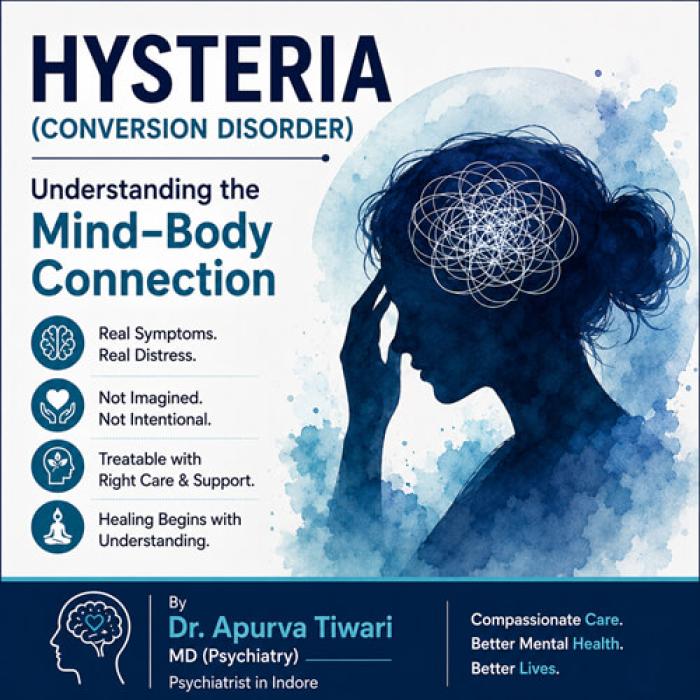
Hysteria (Conversion Disorder): Understanding the Mind-Body Connection
By Dr. Apurva Tiwari, MD (Psychiatry), Psychiatrist in Indore
Many people have heard the term "hysteria", but it is often misunderstood and surrounded by myths. In modern psychiatry, the word hysteria is no longer used as a formal medical diagnosis. Instead, the condition is commonly known as Conversion Disorder or Functional Neurological Symptom Disorder (FND). It is a genuine medical condition in which emotional or psychological stress manifests as physical symptoms without any structural disease explaining those symptoms.
Understanding this condition is important because many patients suffer unnecessarily due to delayed diagnosis, social stigma, or the misconception that they are "pretending" or "faking" their symptoms.
What Is Hysteria?
Historically, the term "hysteria" was used to describe a wide variety of emotional and physical symptoms, particularly in women. Modern medicine has replaced this outdated and misleading term with Conversion Disorder (Functional Neurological Symptom Disorder), recognizing that the symptoms are real and deserve proper medical evaluation and treatment.
People with conversion disorder experience neurological symptoms that cannot be explained by routine medical investigations. The brain is functioning differently rather than being structurally damaged.
Common Symptoms
Symptoms vary from person to person and may appear suddenly, especially after stressful events.
Some common symptoms include:
- Sudden inability to speak
- Temporary loss of vision
- Weakness or paralysis of an arm or leg
- Difficulty walking
- Tremors or shaking
- Seizure-like episodes (non-epileptic seizures)
- Numbness or loss of sensation
- Difficulty swallowing
- Episodes of fainting without a medical cause
These symptoms are not intentionally produced. The patient is genuinely experiencing them.
What Causes Hysteria?
There is no single cause. Usually, several biological, psychological, and social factors work together.
Possible triggers include:
- Severe emotional stress
- Family conflicts
- Relationship problems
- Workplace stress
- Academic pressure
- Traumatic experiences
- Anxiety disorders
- Depression
- Childhood emotional trauma
- Major life changes
Sometimes the person may not even realize that emotional stress is affecting their body.
Who Is at Risk?
Although conversion disorder can occur at any age, it is more commonly seen in:
- Adolescents and young adults
- Women (though men can also be affected)
- Individuals with anxiety or depression
- People exposed to significant psychological trauma
- Those with chronic stress
Is It "All in the Mind"?
One of the biggest myths is that patients are pretending.
This is completely false.
The symptoms are real, and patients are not consciously producing them. Brain imaging studies suggest that the brain processes movement, sensation, and emotions differently in people with Functional Neurological Disorder, even when routine scans appear normal.
Patients deserve compassion—not criticism.
How Is It Diagnosed?
Diagnosis begins with a detailed medical evaluation.
A psychiatrist or neurologist may recommend:
- Detailed medical history
- Physical examination
- Neurological examination
- Blood investigations
- MRI or CT scan (if needed)
- EEG (when seizures are suspected)
- Psychological assessment
The purpose is first to rule out neurological or medical illnesses before confirming conversion disorder.
Treatment of Hysteria
The good news is that hysteria is treatable.
Treatment usually involves a combination of approaches.
1. Psychoeducation
The first and most important step is helping patients understand their illness. Knowing that the symptoms are genuine but reversible often reduces anxiety.
2. Psychotherapy
Counselling and psychotherapy help patients identify stressors and develop healthier coping strategies.
Cognitive Behavioural Therapy (CBT) is particularly effective for many individuals.
3. Stress Management
Techniques such as:
- Relaxation exercises
- Deep breathing
- Meditation
- Mindfulness
- Yoga
- Healthy sleep habits
can significantly reduce symptom frequency.
4. Physiotherapy
When weakness or movement problems are present, physiotherapy helps patients regain confidence and normal movement.
5. Medication
There is no medicine that directly cures conversion disorder.
However, medications may be prescribed if the patient also has:
- Anxiety
- Depression
- Panic disorder
- Sleep disturbances
Treating these conditions often improves overall recovery.
Can Hysteria Be Prevented?
Although prevention is not always possible, maintaining good mental health reduces the risk.
Helpful strategies include:
- Managing stress early
- Seeking counselling when overwhelmed
- Maintaining regular exercise
- Sleeping adequately
- Talking openly about emotional problems
- Building healthy relationships
- Avoiding prolonged emotional suppression
When Should You Consult a Psychiatrist?
Consult a psychiatrist immediately if you or your loved one experiences:
- Sudden weakness without a medical explanation
- Recurrent fainting episodes
- Non-epileptic seizures
- Loss of speech
- Persistent unexplained neurological symptoms
- Symptoms triggered by emotional stress
- Anxiety or depression affecting daily life
Early diagnosis leads to faster recovery and prevents unnecessary investigations.
Living with Conversion Disorder
Most patients improve significantly with proper treatment, family support, and regular follow-up. Recovery may take weeks or months depending on the severity and duration of symptoms.
It is important to remember that recovery is a gradual process. Family members should avoid blaming the patient and instead encourage treatment adherence and emotional support.
Frequently Asked Questions
Is hysteria a mental illness?
The traditional term "hysteria" is outdated. Today, psychiatrists diagnose Conversion Disorder or Functional Neurological Symptom Disorder, where psychological factors contribute to genuine physical symptoms.
Can hysteria be cured?
Yes. Many patients recover completely with psychotherapy, stress management, rehabilitation, and treatment of associated anxiety or depression.
Does hysteria only affect women?
No. Although it may be more common in women, men and children can also develop the condition.
Are the symptoms fake?
Absolutely not. The symptoms are real and can significantly affect daily life.
Final Thoughts from Dr. Apurva Tiwari
Mental health and physical health are deeply connected. Sometimes emotional distress can present as physical symptoms that are frightening for both patients and families. Recognizing these symptoms early and seeking professional psychiatric care can make a remarkable difference.
If you or someone close to you experiences unexplained physical symptoms associated with stress or emotional difficulties, do not ignore them. A timely consultation with a qualified psychiatrist can help identify the underlying cause and begin appropriate treatment, leading to a healthier and more fulfilling life.

